Evidence-driven updates across biotech and AI

Articles, whitepapers and podcasts from our team and advisors.

Whitepapers

Rebuilding a Brittle Market: Regulatory Reform and the Return of Innovation in Osteoporosis

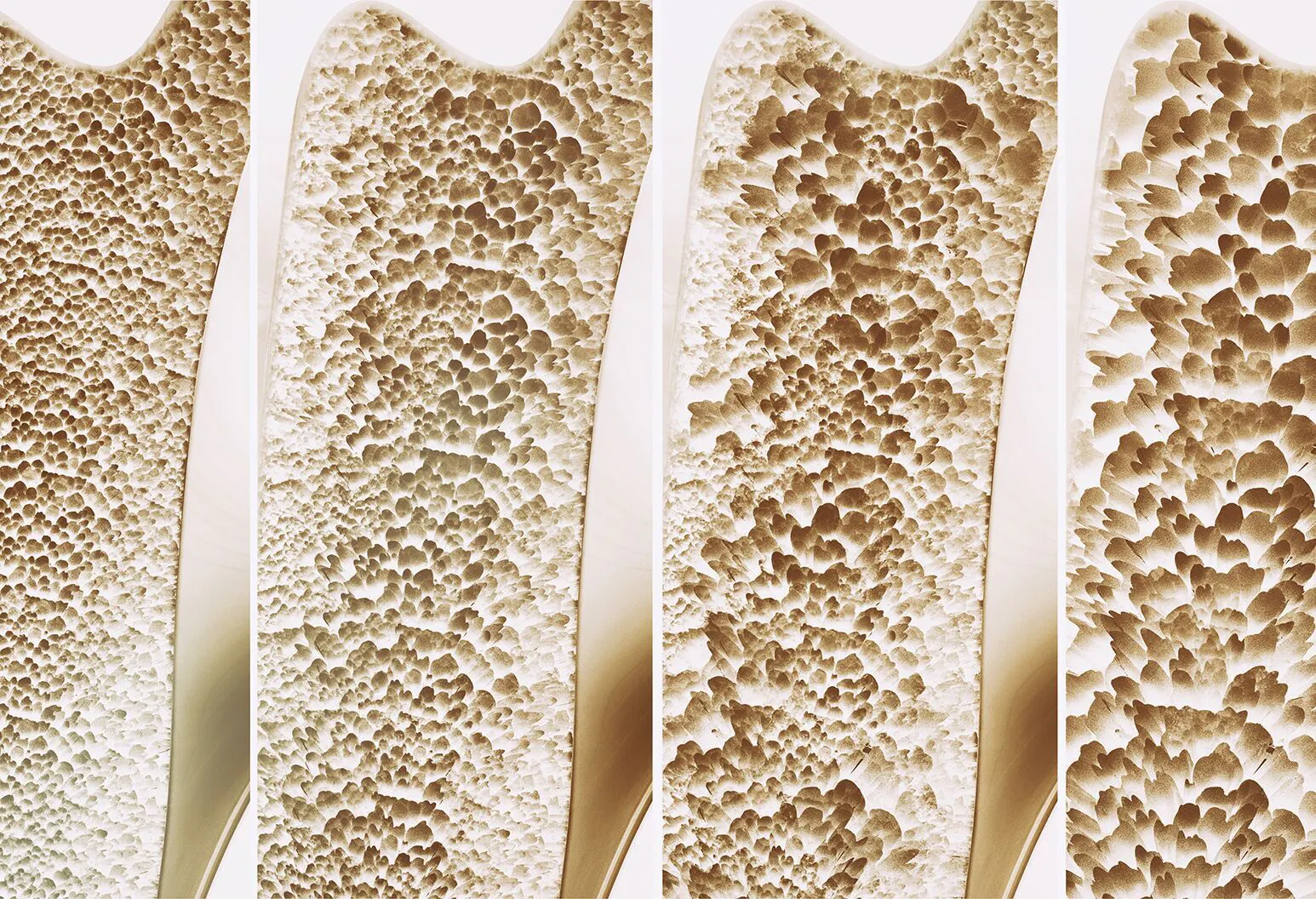
Osteoporosis, a condition where bones become weak and brittle due to loss of bone density, is often seen as a natural part of aging, but it is more accurately a chronic disease caused by disrupted bone remodeling. 10 million Americans over age 50 have osteoporosis, and another 43 million have low bone mass.[1] Despite this, many patients remain undiagnosed and untreated. While existing therapies can reduce fracture risk, they do not provide a safe, effective long-term solution for a disease that develops over decades. Progress in the field has been slowed not only by biology but also by demanding regulatory requirements that de-incentivized innovation. Historically, the FDA required large, lengthy, and expensive phase 3 trials. These trials often involved more than 7,000 patients over 3–5 years to show reductions in fracture risk, even when improvements in bone mineral density (BMD) were observed. In December 2025, the FDA updated its approach, accepting total hip BMD, measured by dual-energy X-ray absorptiometry (DXA), as a validated surrogate endpoint for postmenopausal osteoporosis trials. [2],[3] While this does not solve the underlying biology, it significantly reduces the time, cost, and complexity of clinical development, enabling clinical proof-of-concept in a 24-month trial and making osteoporosis a more attractive area for innovation and investment.

See More

Whitepapers

God Bless the Private Sector: How Private Funding is Bridging the Gap

Publicly funded basic research has long served as the foundation for breakthroughs. Yet proposed federal cuts, including reductions to the NSF and NIH, now threaten the early-stage research that the private sector traditionally does not fund. These changes have already stalled projects, eliminated jobs, and raised concerns about broader delays in scientific progress. At the same time, the United States faces intensifying competition with China, whose sustained investment in early-stage biotech has accelerated its global share of drug development. Although the US retains leadership in total R&D value, the trend signals growing vulnerability, one seemingly at odds with the administration’s broader “America First” agenda. The launch of the Genesis Mission, with its emphasis on AI-enabled science and biotechnology as a domain of national importance, hints at a potential restructuring rather than an abandonment of federal scientific priorities. In this environment, the private sector has emerged as an essential stabilizing force. As public funding recedes, venture capital and philanthropy must intervene earlier in the research lifecycle. This shift can bring rigorous private-sector diligence to basic science, likely focusing resources on fewer projects but with greater efficiency. To handle this complexity, biology-specific AI tools will shift from optional luxuries to indispensable necessities. Ultimately, this disruption offers a chance to modernize our infrastructure: building a resilient ecosystem capable of expanding, not just restoring, American scientific progress.

See More
Whitepapers

The Case for Venture Capital in Biotechnology

There are many perceptions of what a venture capitalist (VC) is. In the biotech space, VCs are enigmatic because many of us never imagined becoming VCs, and many future VCs might have no idea they’re headed down that path either. My story, like many in biotech, started with a passion to help sick people. I was fortunate to discover my passion at the age of six, when I told my parents that I wanted to be a genetic engineer. I didn’t fully understand what that entailed, but the film Jurassic Park sparked my curiosity. I was fascinated by the idea that nature had invented biological Legos called DNA that could be assembled to create humans, sea slugs, bananas, bacteria, mold, and, most intriguingly, entirely new life forms. Less than two decades later, I received my PhD in Molecular and Cellular Biology. I loved deciphering nature’s clues and genetic codes to figure out the “how” and “why” in nature’s playbook. However, I didn’t yet know how to translate this knowledge from the lab into life-saving therapies. I continued my research journey post-PhD and eventually landed an industry postdoc position at Pfizer. At Pfizer, I soaked up every fact, lesson, piece of jargon, and process required to take an initial discovery and turn it into a drug. At this moment, something clicked for me: my true passion wasn’t just making discoveries; it was figuring out how to transform those discoveries into medicines capable of helping patients. My time at Pfizer also made it clear that I wasn’t ready to join an organization as large as Pfizer long-term. Thankfully, after years of trying different career trajectories and with the help of some great mentors, it became clear that biotech venture capital uniquely aligned both my personal goals: contributing to life-changing therapies, and professional goals: being able to earn a living while pursuing my personal passion. As they say, “Do what you love, and you’ll never work a day in your life.”

See More
Articles

The New Era of Multi-OMICs Therapy: Our investment in Character Bio

Age-related macular degeneration (AMD) affects millions worldwide, leading to progressive vision loss and limited treatment options. Character Bio is changing that paradigm by combining an AI-driven multi-omics platform with the world’s richest AMD dataset to develop new precision therapies for these patients. At Luma, we invest in transformative companies, and Character Bio’s groundbreaking work promises to redefine the future of eye health.

See More
Whitepapers

Decoding Aging: Breakthroughs, Challenges and the Future of Longevity Drug Development

For centuries, humans have sought to understand—and potentially slow, halt or reverse—the aging process. Recent advances in molecular and cellular biology have begun to illuminate the core hallmarks and drivers of aging, providing a foundational framework for new therapeutic approaches. While some of these therapies have not fulfilled their initial promise, others have achieved remarkable progress, and ongoing clinical trials may pave the way for a new class of longevity drugs. Still, despite growing optimism, the journey toward regulatory approval and widespread adoption of these treatments presents a unique set of challenges that must be navigated carefully.

See More
Podcasts
External link

Inside the Golden Age of Biotech: A Conversation with Hans Bishop of Altos Labs

In this episode, we’re joined by Hans Bishop, President, Founder, and Board Co-Chair of Altos Labs. Hans previously served as the CEO of GRAIL and is a seasoned biotech executive and entrepreneur, known for his leadership and innovation in the healthcare industry. Hans continues to be an influential figure in the biotech industry and gives his perspective on some of the future innovations in healthcare and longevity.

See More
Whitepapers

Unlocking Cures: The Path from Concept to Human Clinical Trials

Advances in drug development and discovery have revolutionized the delivery of life-saving treatments to patients. Despite the immense impact of these innovations, the journey from concept to bedside remains largely misunderstood. Through this primer series, we explore the complex processes behind drug discovery, highlighting the challenges the industry still faces and the critical need for investment of time and resources to deliver the next generation of medicines.

See More
Podcasts
External link

Exploring the Repeatome: A Conversation with Dr. Rosana Kapeller of Rome Therapeutics

Dr. Kapeller speaks with Dr. Themasap Khan, PhD and Luma Group Co-Founder, about her path to the biotech industry and leading the development of new approaches to treating serious diseases to unlock the power of the ‘dark genome.’

See More