Drug Development: The Alchemy of Hope
By Luma Group - 5 minutes
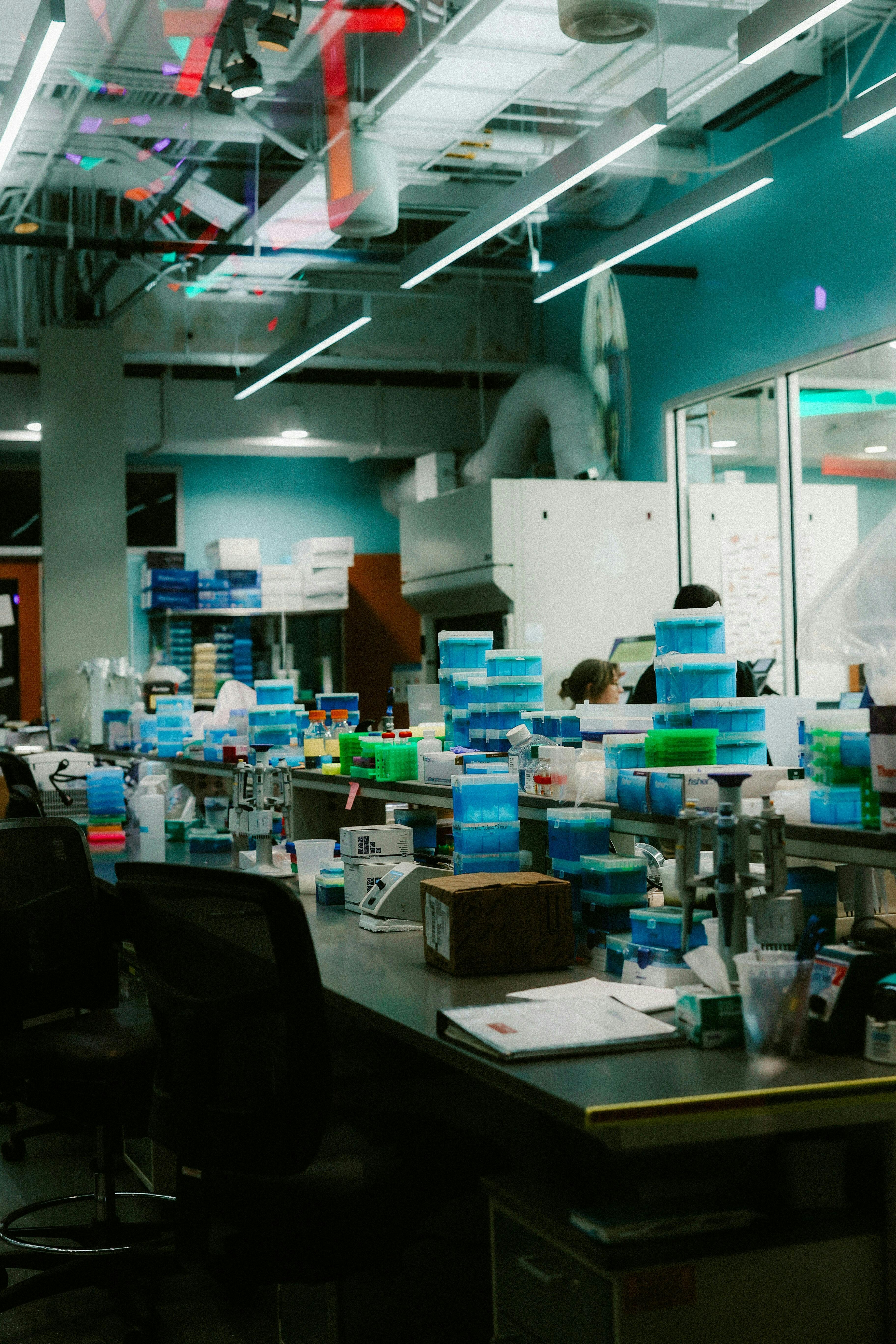
The journey from an idea to a commercialized medicine is, at its core, a human story.
We often tell it with charts and Kaplan–Meier curves, with mechanistic diagrams and regulatory milestones. But those are the artifacts, the visible surface of something far more lived in, a long life marked by detours and reversals, by bursts of momentum and long stretches of doubt. Like people, drugs rarely follow a single path. And like people, some medicines endure for decades, outlasting the careers of the teams who brought them into the world. Along the way, there are triumphs and mistakes, near misses and recalibrations, setbacks, and reinventions. There is aging of hypotheses, researchers, assays, formulations, and strategies. And yes, sometimes there is death (when biology refuses to cooperate and the most honest answer is to stop).
A commercialized drug feels like a human story for one simple reason, every drug is the physical expression of a very human emotion, hope.
February 2026
The Transmutation of Hope
Hope in our world is not naïve optimism. It is an amalgam of creativity and imagination, stubbornness and craft, discipline and endurance, often paired with a kind of productive ignorance. Not ignorance of data, but ignorance of inevitability, the willingness to proceed as if the hard thing might be possible even when statistics and history say otherwise.
Each program or discovery begins as empathy, an encounter with human suffering, direct or indirect, that sparks a question no one can un-ask: what if we as a society and species could change this? That impulse is not sentimental, it is the fuel that feeds the engine of healthcare. It’s what drives people to work late nights, pushes teams to revisit problems from new angles, and transforms “interesting biology” into the next life-changing therapy.
When a therapy finally reaches a patient, it is not merely a molecule or a modality. It is empathy made tangible or physical. We, as a species and society, have chosen to spend almost an intangible amount of time, effort, and resources to convert that empathy into reality and rewrite the tragedy of our species future health. A treatment is a totem, something you can hold, prescribe, deliver, or measure, and transfer hope and empathy into a reduction of suffering or a cure. It truly is an act of alchemy; we have taken our desire(s) for a healthy future and transmuted these emotions into a solution(s) to alleviate pain and suffering for our fellow man.
Each therapy is a promise made by humans, forced into physical form to rewrite our species’ future health.
An Odyssean Passage of Hope
We sometimes romanticize drug development as a heroic march from discovery to approval. The lived reality is closer to an Odyssean voyage: long, winding, and perilous, with failure waiting at every bend.
Almost all programs will not make it. That isn’t cynicism, it is simply the reality of our industry. Biology is complex, disease is adaptive, and humans are variable. A target that looks clean on paper becomes messy in vivo. A biomarker that behaves beautifully in a subset collapses under broader recruitment. A toxicity appears where no model predicted it. Manufacturing reveals a constraint that no one saw coming. Regulators raise a question that reshapes the trial’s outcome. A competitor changes the standard of care midstream. The story of a drug is often the story of repeated negotiation with reality.
From the outside, that attrition can look like inefficiency. From the inside, it looks like rigor. Progress in this field is not linear, it is selective. We do not simply build, we test, discard, rebuild, and test again, because the cost of being wrong is borne by patients we are aiming to help.
The Hidden Heroes, The Many Hands Behind One Medicine
If a drug’s story resembles a human life, it is also because it is influenced, like any life, by a community.
A commercialized therapy is a communal achievement on a global and species scale. Moving an idea from hypothesis to prescription can take thousands of people, sometimes tens of thousands, working across time and institutions. Scientists refine the mechanism. Clinicians translate it into human trials. Statisticians guard against self-deception. Nurses and coordinators keep studies running. Regulatory teams do the hard work of clarity. Manufacturing and quality teams convert complexity into repeatability. Operations teams make timelines real. And investors and partners keep the effort alive through the long middle.
Even that list is incomplete. Behind every core function is a lattice of support, the people who build instruments, maintain facilities, validate processes, recruit patients, transport samples, manage data, write protocols, and answer the unglamorous questions that determine whether a program survives.
The point is not to inflate the cast. It is to tell the truth; no drug is a solitary achievement. Every approved medicine is a collective act of persistence. Each person who gives something of themselves to that journey leaves an indelible imprint, a collage of human effort that makes the medicine more human than its physical form suggests.
Money is a Catalyst, Not the Substrate
Public conversations often reduce the industry to a moral duel between cure and cost, as if the only tension worth discussing is price tags versus compassion. That framing misses something essential. Money does not create medicines on its own. Capital is a catalyst, it enables the conversion of empathy into action and, hopefully, into therapies, but it cannot substitute for judgment, courage, expertise, or time. If innovation were simply a function of funding, we would already have cures on demand. We do not, because biology does not yield to spreadsheets and the cost of converting empathy and hope into a cure is as expensive as launching a rocket into space.
What sustains this work is not primarily financial incentives; it is the internal empathy of the mission, carried by millions of professionals globally, alongside a much larger academic ecosystem and a broad network of supporters. It is the stubborn refusal to accept that suffering is fixed and unchangeable. It is the decision, repeated daily, to try again after the last attempt failed.
That is also why perseverance in this sector can look irrational from the outside. In most corners of the economy, repeated failure and loss of billions of dollars is considered failure. In drug development, repeated failure is often the entry fee to eventual success. The work asks people to live inside unfavorable odds without becoming numb to them, to keep standards high, to keep curiosity alive, and to keep the moral center intact.
The Strange Privilege of Doing “Impossible” Work
So why do it?
Why choose a profession where setbacks are routine and certainty is rare, where an experiment can invalidate a year, a clinical readout can erase a decade, and a single signal can end a program overnight?
Because the numbers are not impossible, they are just hard. And hard things are worth doing when the outcome is a child’s seizure controlled, a tumor held at bay, a family given more time, or a life returned to normal.
When a drug succeeds, the victory is not only scientific. It is existential. It is humanity practicing a kind of alchemy, taking our species’ aggregate empathy for the sick and (through the right people, the right reasoning, and a measure of luck) turning it into something that reduces suffering in the world.
That is the true arc of the story, from empathy, to effort, to evidence, to something you can place into a clinician’s hands and a patient’s life.
We call it development. We call it translation. We call it commercialization.
But in the end, it is hope, disciplined, tested, and made real. Each new therapy is a physical manifestation of our species’ hope for a healthier tomorrow.