Q: From a clinical standpoint, how could this change how physicians monitor cirrhosis patients once fully validated?
A: We believe that our test will represent a shift from episodic, reactive monitoring to more continuous and proactive cirrhosis management.
Instead of waiting for clinical deterioration or relying on intermittent, inconsistent lab test values, hepatologists can use a blood-based test to track disease biology over time and identify early progression. That can inform more timely interventions, closer monitoring, and personalized treatment. Proving this in cirrhosis would add momentum to bringing these clinical improvements to other chronic disease patients and their physicians.
Q: What does earlier detection of disease progression enable in terms of intervention or patient outcomes?
A: Earlier chronic disease progression detection creates a wider window of opportunity for patients. In cirrhosis, once patients decompensate or develop large tumors, outcomes worsen significantly and treatment options become more limited.
If you can identify liver disease progression earlier, you can intervene sooner—whether that’s adjusting therapy, prioritizing patients for liver transplant evaluation, or increasing surveillance to prevent complications. Ultimately, the goal is to shift the disease course before irreversible damage occurs.
Q: How are you thinking about expanding into related areas like MASH (fatty liver inflammation) or broader liver diseases?
A: Cirrhosis is just one part of a much broader continuum of liver disease. We see a significant opportunity to apply the same platform to earlier stages, including MASH, where there is a major unmet need for non-invasive diagnostics and monitoring tools.
Because our approach is fundamentally based on reading organ-specific signals, it’s inherently extensible. We’re actively exploring how to expand across the liver disease spectrum and, more broadly, into other organ systems where similar challenges exist.
Q: On the AI side, some of your genomic foundation model work was accepted to ICLR—what was the core innovation behind that work?
A: We disclosed some methods that allow us to retrofit genomic language models to DNA methylation foundation models via continual pretraining. Beyond feasibility, we looked at interpretability of resulting models, as well as how informative and expensive they were.
We found that this strategy led to informative methylation-aware foundation models that were interpretable and inexpensive if high-quality input DNA methylation data was used. These models can also be adapted across multiple use cases—from disease detection to tissue-of-origin mapping—while benefiting from shared learning from large datasets.
Q: How tightly integrated are your foundation models with the Whole-Body Atlas—does performance improve as the dataset grows?
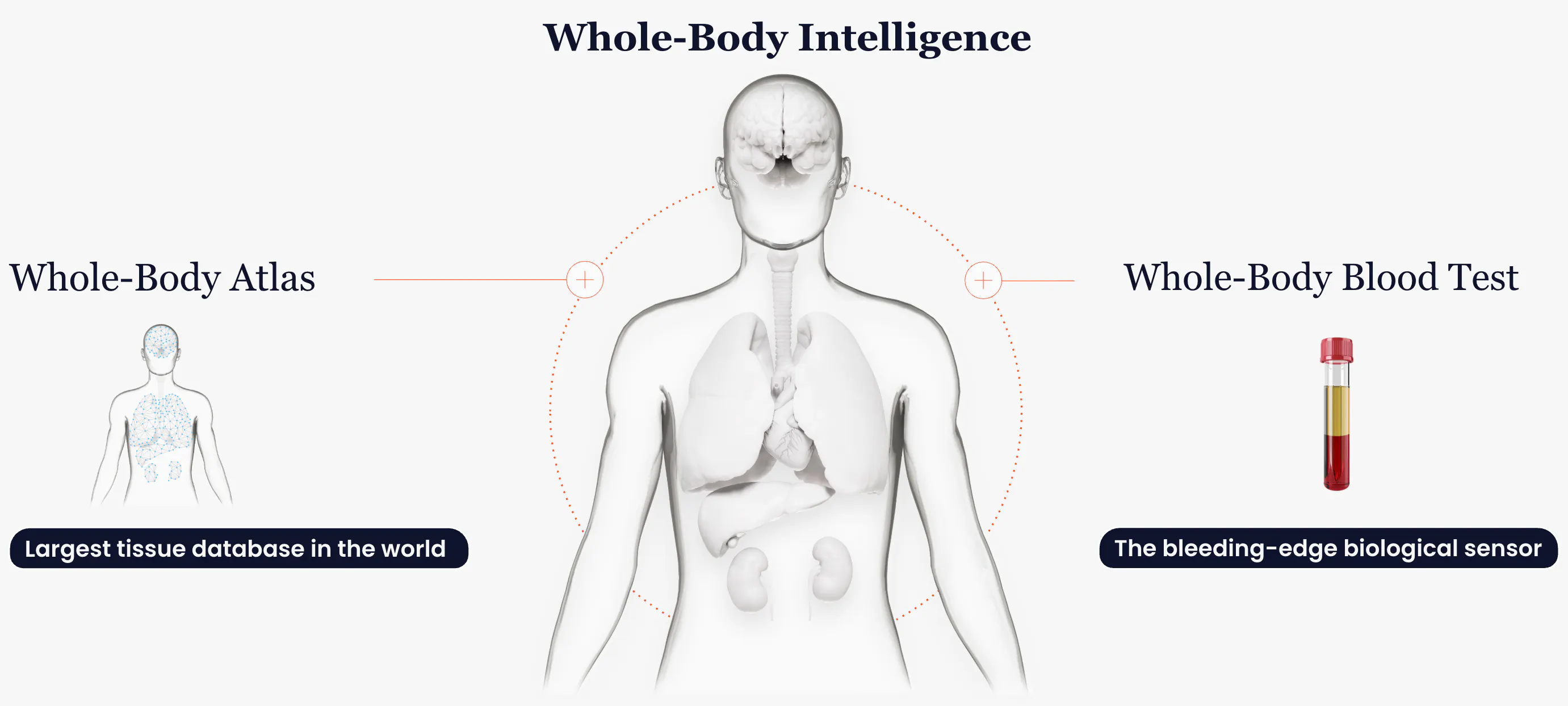
A: They’re becoming more and more deeply integrated. The Whole-Body Atlas provides the structured, high-quality data that the foundation models are trained on, and in turn, the models can help refine and expand the atlas.
As the dataset grows in both scale and diversity, we will see continuous improvements in model performance. More high-quality data allows models to capture more nuanced biological patterns, improve accuracy, and extend our capabilities to new indications.
Q: What have you learned about the role of high-quality, curated data in building clinically useful AI models?
A: It’s the most important factor for us. An AI model’s performance is only as good as the input data it’s trained on. High-quality, well-annotated, and clinically relevant datasets are critical for building models in healthcare that perform reliably in real-world settings.
We’ve invested heavily in data curation and quality control with our Whole-Body Atlas, because that’s what ultimately enables us to generate insights that clinicians can trust.
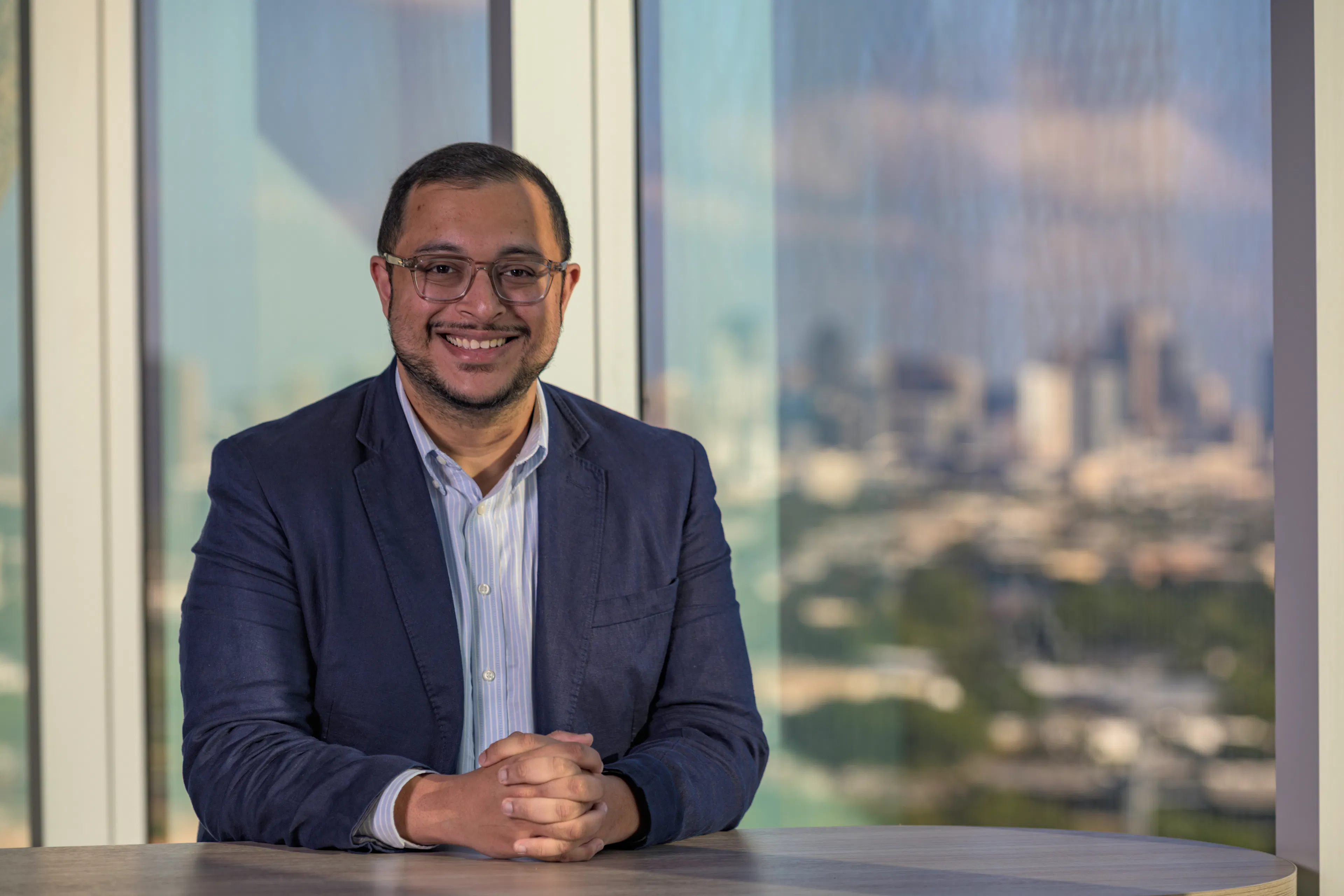
Q: You recently brought on Amit Singal as Chief Medical Officer—what drove that decision at this stage?
A: As we transition from platform validation to large-scale clinical studies and publication, it was critical to bring in a leader with deep expertise and credibility in liver disease. Amit is widely recognized as one of the leading authorities in hepatology, with a career that has focused on improving outcomes for patients with MASH, cirrhosis, and liver cancer.
He currently serves as Chief of Hepatology at UT Southwestern, where he leads both clinical care and research efforts across the liver disease continuum—from prevention and screening to early detection and treatment. He also serves as Medical Director of the UT Southwestern Liver Tumor Program and holds the Willis C. Maddrey Distinguished Chair in Liver Disease.
His work has been particularly focused on closing gaps in care for cirrhosis patients, including identifying disease progression and liver cancer earlier, when intervention is still possible. He has authored more than 300 peer-reviewed publications and led multiple NIH-funded studies examining the cirrhosis-cancer care continuum.
That combination of frontline clinical experience, translational research leadership, and a deep understanding of real-world care pathways made him the ideal partner for us as we move further towards clinical validation and adoption.
Q: What role will he play as you move toward publication, validation, and eventual clinical adoption?
A: Amit plays a central role in shaping our clinical strategy and ensuring that what we’re building aligns with how medicine is actually practiced. He is leading efforts around study design, endpoint selection, and interpretation of clinical data as we prepare for publication and broader validation.
Equally important, he brings a strong perspective on how new tools need to integrate into clinical workflows to truly impact patient care. His experience leading large liver disease programs and managing complex patient populations gives him a clear view on where current approaches fall short—and where we can make the biggest difference.
He is also deeply connected to the hepatology community, which is key as we engage with clinicians, build trust in the data, and ultimately drive adoption. At a broader level, his focus aligns closely with our mission: shifting liver disease progression detection and management earlier, when there is still opportunity to meaningfully change outcomes.
Q: With full results expected later this year, what milestones should we be watching for?
A: The critical milestone will be the full publication of our cirrhosis study. We also plan to conduct a final cirrhosis study, expand to additional liver and non-liver indications, and further advance our AI models and Whole-Body Atlas. Each of these steps is focused on moving Curve closer to clinical adoption and real-world impact.
 Articles